
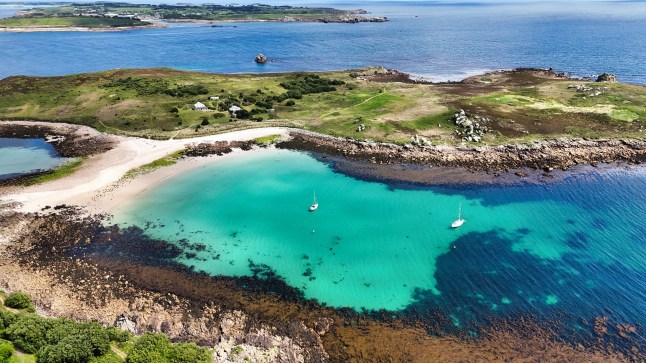
If you’re searching for an end-of-summer break and want to combine friendly locals with stunning scenery, we’ve got just the place.
The Isles of Scilly — a scattering of islands 28 miles off the Cornish coast — have officially been named the friendliest place in the UK.
It’s thanks to a new index using government data to measure how often people chat to neighbours, feelings of loneliness, local pride, and levels of participation in civic life.
The islands achieved a near-perfect score for almost all of the eight ‘connection barometers,’ with 95.4% saying different backgrounds get on well and 88.8% feeling they belong to their neighbourhood.
Elsewhere, 87.3% of residents said that their neighbours can be trusted, while 86.5% are proud to live in their local area.
Scilly was followed by South Hams in south Devon, West Devon, Derbyshire Dales and Richmond upon Thames. The area named least friendly was Barking and Dagenham.
As this beautiful archipelago adds another string to its bow, here’s everything the Isles of Scilly have to offer.
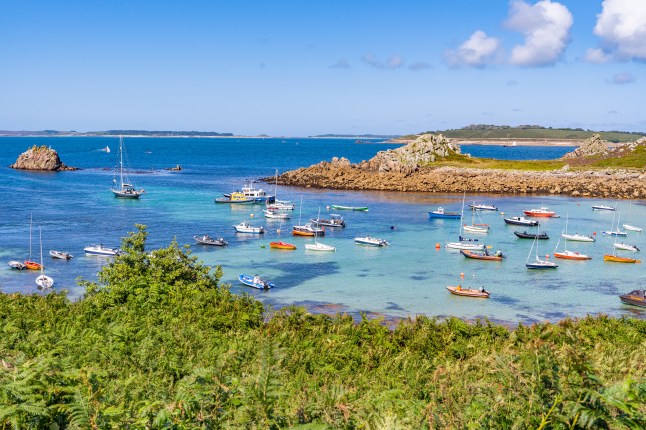
A subtropical paradise
The words ‘UK’ and ‘tropical’ don’t tend to go hand-in-hand, but the Isles of Scilly make an exception.
The ‘sunshine isles’ are warmed by the Gulf Stream, meaning they enjoy higher sunshine hours and milder winters than the rest of the UK.
While there are 140+ islands, only five are inhabited. These are: St Mary’s, Tresco, St Martin’s, Bryher, and St Agnes.
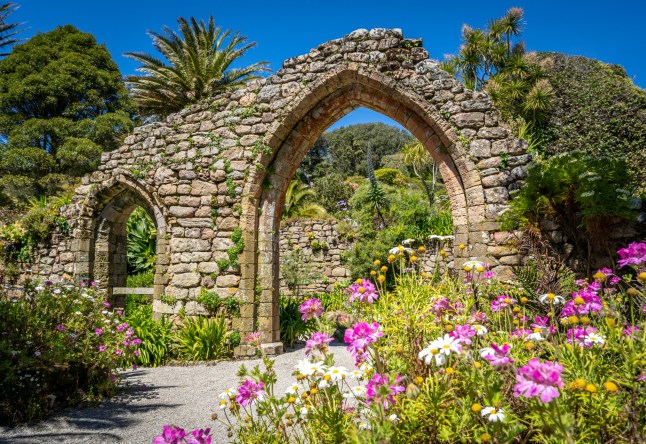
Tresco is known for its lush, subtropical 19th-century Tresco Abbey Garden, where over 20,000 exotic plants from 80 countries thrive in the mild microclimate.
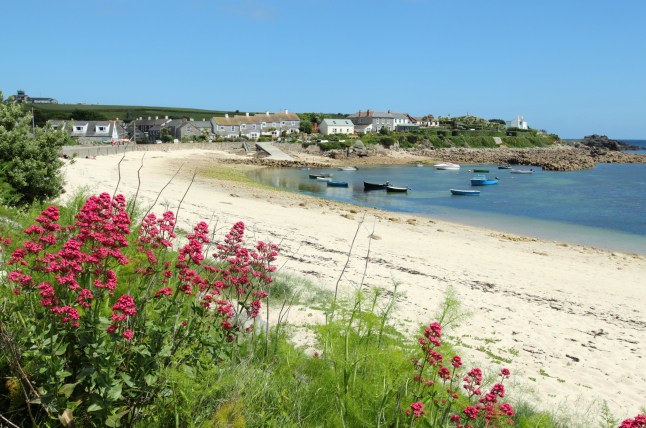
The family-owned island also features spectacular beaches like Appletree Bay, a half-mile crescent of soft, near-white sand and crystal-clear azure waters.
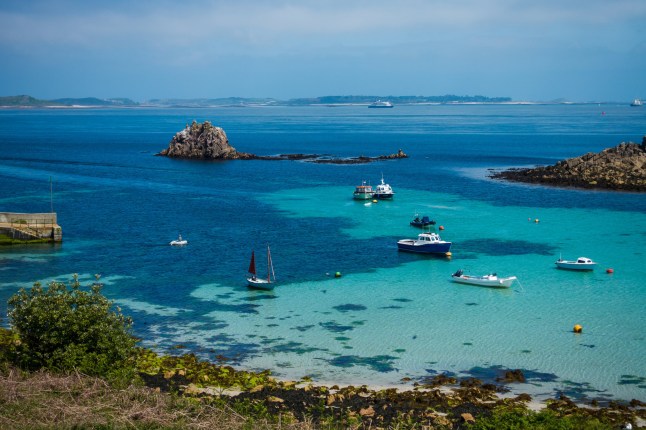
In St Mary’s, the largest island and main hub, sub-tropical flora grows freely, while Pelistry Bay and Bar Point on the remote eastern shore offer prime snorkelling conditions.
Meanwhile, Great and Little Bay on St. Martin’s could easily be mistaken for its Caribbean isle namesake, as The Bar in St Agnes is a breathtaking sandbar where dolphin sightings are common.
Ancient villages
The Isles of Scilly offer more than just dazzling beaches. The islands are steeped in history, too.
Bant’s Carn is a free-to-visit Bronze Age burial mound on St Mary’s, and one of the best examples of a Scillonian entrance grave.
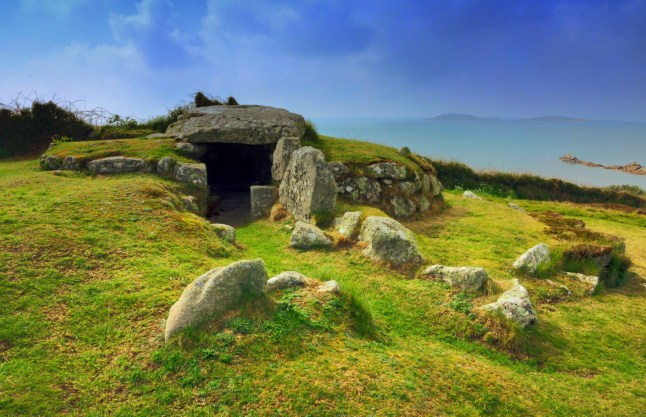
The historical landmark is in the care of English Heritage and located on a hilltop with sweeping views of the ocean.
Below the graves you’ll find the remains of the Iron Age village of Halangy Down.
This prehistoric settlement dates back to around 200BC, and features a courtyard house and garden plots.
You can also walk along the coast to Innisidgen Burial Chambers, two more Bronze Age ceremonial monuments.
If you feel like combining hiking and history, St Mary’s offers a two-hour trek along the Garrison Walls, which date to the 16th to 18th centuries.
On Tresco, visit the ruined 16th-century King Charles’ Castle, overlooking the New Grimsby Harbour.
Again, free to enter, it was built between 1548 and 1551 during the reign of King Edward VI to defend against French and Spanish threats.
A surprising wine paradise
It doesn’t have the clout of Provence or Tuscany, but the islands’ mild maritime climate means a small-scale, boutique winemaking scene has emerged.
There are two wine producers on the archipelago: Holy Vale Vineyard on St Mary’s and St Martin’s Vineyard on St Martin’s.
The former is a small, family-run vineyard set in a sheltered valley, that produces Chardonnay and Pinot Noir.
The latter offers tours and wine tastings where guests can visit the wildflower-filled vineyard above the dunes of Par Beach.
It won’t break the bank, either. A self-guided tour with tasting costs £12 per person and under-16’s are free.
If you just want to explore the vineyard, it’s £6 per person.
Not a wine lover? St Martin’s Vineyard also boasts a ‘boozy farm shop’ where they sell everything from sparkling cider to their own beers, produced in their nano-brewery.
And of course, being an archipelago, there is plenty of fresh Atlantic seafood to enjoy alongside the wine.
Expect everything from fresh crab and lobster to scallops and mussels.
How to get to the Isles of Scilly
There are myriad ways to get to the Isles of Scilly from London.
The cheapest way is to take a five-hour train from Paddington to Penzance for around £62 one-way.
Then, take a 2-hour and 45-minute ferry to St Mary’s. A day-trip ferry foot passenger fare costs £35.
Note: The ferries only operate in season, between March and November.
You can also fly or sail from Penzance Harbour, Land’s End, Newquay or Exeter Airports with Isles of Scilly Travel.
While there, island-hopping is a non-negotiable.
Catch daily local boats from St Mary’s quay to explore the quieter outer islands of St Martin’s, St Agnes, Bryher, and Tresco.
Iconic UK ferry to stop sailing after 49 years at sea
Cornwall is preparing to bid ‘adieu’ to a ship that has been part of the furniture for almost 50 years.
Since its maiden voyage in 1977, the Scillonian III has ferried over five million passengers from Penzance to the Isles of Scilly, an idyllic archipelago 28 miles off the Cornish coast.
In that time, the vessel has completed some 10,000 return journeys and travelled more than 688,500 nautical miles.
But now, the Scillonian III is in its final season, and will set sail for the last time in November.
From March 2027, the Scillonian III will be replaced with the Scillonian IV, which will carry more passengers and give them a faster ride.
This article was originally published on August 18, 2026.